Blake Knox
Former Special Operator — Counterterrorism
Operational Profile
Blake Knox is a former special operator at the tier-one level. His exact unit is deliberately unspecified — Delta Force, SEAL Team Six, CIA SAD are all plausible, and the ambiguity is intentional. He now works for a government counterterrorism organization operating at the intersection of physical threat and cyberwarfare: the kind of unit that doesn't explain itself.
Knox is characterized by operational efficiency and an emotional restraint that is load-bearing rather than decorative. He does not perform calm. He is calm, in the way that someone who has catalogued enough danger learns to be — because panic costs time, and time is the variable that kills.
How He Works
Knox observes before he acts. He has a doctor-at-a-scene quality of attention — not detached, but precise: taking in what is actually there rather than what should be. When others react, Knox catalogs. He arrives at conclusions that others have not yet formed the questions to ask.
His notebooks are a recurring structural device across the series. They function as both operational log and private architecture — the only place where Knox permits himself to think aloud. What he writes in them and what he withholds tells you as much about him as the action does.
The Series Arc
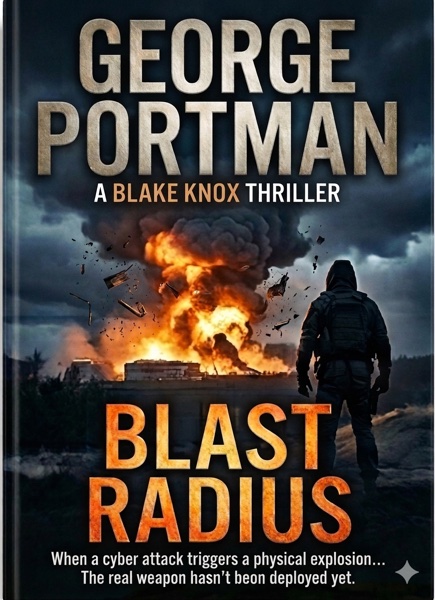
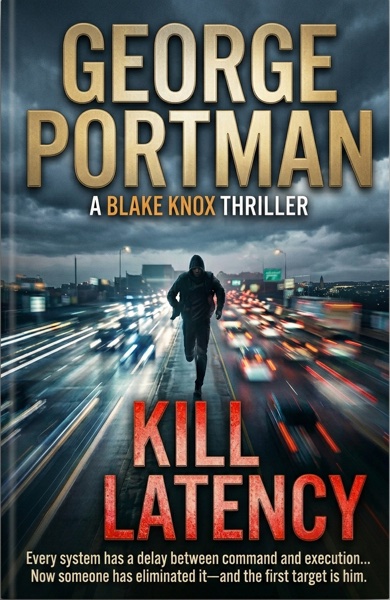
Across eight novels, Knox tracks the evolution of threat — from the visible and physical (Blast Radius) to the invisible and systemic (Kill Latency). Each book is self-contained. Together they trace a man moving through a world that is becoming less legible, faster, and more dangerous in ways that resist the old categories of enemy, weapon, and war.
By Kill Latency, Knox is facing a threat unlike any he has encountered: faster than he is, more precise, always a step ahead — and watching him. For the first time in eight novels, the advantage Knox has always relied on has been taken away. He is not sure how to hunt something that doesn't get tired, doesn't get distracted, and already knows where he'll look.